
 By
By Building muscle requires two things to happen simultaneously: a consistent training stimulus and sufficient nutrition to support the adaptation that follows. Most people manage the training side reasonably well. The nutrition side, particularly sustaining a calorie surplus over weeks and months, is where progress stalls for a significant portion of people who train hard.
What a Mass Gainer Actually Does
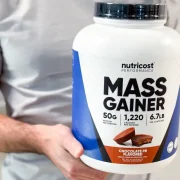
A mass gainer is a high-calorie, high-protein supplement designed to support a calorie surplus for people who struggle to achieve one through whole food alone. It’s not a replacement for eating well. It’s a practical tool for people whose energy demands or appetite make consistent surplus eating genuinely difficult.
A standard protein powder delivers 25 to 30g of protein per serve at roughly 100 to 150 calories. A mass gainer operates on a different scale entirely. A typical serve provides 40 to 60g of protein alongside 80 to 120g of carbohydrates, totalling 500 to 700 calories per serve. That’s a meaningful contribution to a daily calorie surplus without requiring an additional full meal.
Who a mass gainer suits
Mass gainers suit a specific type of person. They work well for people with fast metabolisms who eat consistently but still can’t sustain a calorie surplus, athletes in high-volume training blocks with elevated energy demands, and anyone in a dedicated muscle-building phase where gaining weight is the explicit priority.
They’re not appropriate for people who are already eating above maintenance, or for those who want to improve body composition without a significant weight gain focus. In those situations, a standard protein powder serves the purpose without the additional calorie load.
What to look for on the label
Not all mass gainers are formulated with quality in mind. Hitting a high calorie count is straightforward. Doing it with meaningful nutrition is not.
The protein dose per serve should be substantial, at least 30 to 40g, from a quality source listed as the primary ingredient. The carbohydrate source matters. Complex carbohydrates from oats or waxy maize digest more steadily than simple sugars and support sustained energy rather than a spike and crash. Individual ingredients and their doses should be fully disclosed with no proprietary blends. The protein figure should come from the stated protein source, not from cheaper amino acids added to inflate the nitrogen count on testing. Independent batch testing by an accredited third-party laboratory confirms that what’s on the label reflects what’s in the product.
Building a Stack Around the Best Supplements for Muscle Gain
A mass gainer covers calories and protein. The best supplements for muscle gain extend beyond that to cover training performance, recovery, and the specific nutritional gaps that limit progress for people training hard over sustained periods.
The stack worth building looks like this.
Creatine monohydrate
Creatine sits alongside protein at the top of the evidence hierarchy for muscle gain. Three to five grams daily increases phosphocreatine stores in skeletal muscle, which supports ATP regeneration during high-intensity efforts. More ATP available means more reps completed, more power output sustained, and better recovery between sets — all of which drive the training stimulus that produces muscle growth. The evidence base across hundreds of peer-reviewed trials is consistent and replicated.
Creatine is particularly worth highlighting for plant based athletes, who have lower baseline muscle creatine stores due to the absence of animal products in the diet. The effect of supplementation is more pronounced in this group than in omnivores.
Pre workout
A quality pre workout supports training performance across the sessions that produce the muscle-building stimulus. Citrulline malate improves blood flow and training volume. Beta-alanine buffers lactic acid during high-rep efforts. Caffeine reduces perceived effort and supports the intensity needed for productive hypertrophy sessions.
The performance benefit of a pre workout during a muscle-building phase is indirect but meaningful. Harder, more productive sessions produce a greater training stimulus, which drives a greater muscle-building response when nutrition supports it.
EAAs or BCAAs
Amino acid supplements are most useful intra-workout for people training at high frequency or in a fasted state. EAAs provide all nine essential amino acids in a fast-absorbing form that supports muscle protein synthesis during sessions when dietary protein isn’t immediately available. BCAAs cover the three most directly involved in muscle performance and are a cost-effective intra-workout option for people whose total daily protein intake is already solid.
Casein protein
Slow-digesting casein taken before sleep reduces the overnight catabolic window and supports muscle repair during the longest fasting period of the day. Research on pre-sleep protein intake consistently shows improved recovery and muscle retention outcomes compared to no protein before bed. For people in a dedicated muscle-building phase, covering overnight recovery is a meaningful addition to daytime protein intake.
The Fundamentals Still Determine the Outcome
Supplements work at the margins of a solid programme. A mass gainer adds calories and protein. Creatine improves training output. A pre workout supports session quality. None of these produce muscle growth independently of consistent training, adequate sleep, and a diet built primarily around whole food.
The stack above is worth building once those fundamentals are in place. Added to a disorganised programme, the return is minimal regardless of how well each product is formulated.
FAQs
How many serves of mass gainer should I take per day?
One serve per day suits most people, timed around training or as a between-meal calorie addition. Two serves may suit athletes with very high energy demands, but this should reflect genuine calorie needs rather than habit. Track body composition over time to confirm the surplus is producing muscle rather than excess fat.
Can I take a mass gainer and creatine together?
Yes. Some mass gainers include creatine in the formula. If yours does, check the dose before adding standalone creatine on top. The effective daily dose is three to five grams total, regardless of source.
How long before I see results from a muscle gain supplement stack?
Creatine typically produces noticeable training improvements within two to four weeks. Protein and calorie contributions are cumulative and compound over weeks and months of consistent use. Realistic natural muscle gain sits at roughly 0.5 to 1kg of muscle per month under good conditions.
Do I need a mass gainer if I can eat enough through food?
No. A mass gainer solves a specific problem: the difficulty of sustaining a calorie surplus through whole food alone. If you can hit your calorie and protein targets through food consistently, a standard protein powder covers the supplementation need without the additional calorie load of a mass gainer.
Is a mass gainer suitable for beginners?
It depends on the individual. Beginners with fast metabolisms who genuinely struggle to eat enough to support muscle growth can benefit from a mass gainer. Beginners who are already eating at or above maintenance don’t need the additional calories and are better served starting with a standard protein powder and creatine.