 By
By Indoor cycling handlebars provide guidance and balance, but they should not carry most of the rider’s upper-body weight. In spinning classes, increasing hand pressure can indicate that the bike setup is unsuitable, the trunk is becoming fatigued or the selected resistance and position exceed the rider’s current control.
Numbness, wrist discomfort and shoulder tension are not problems that should automatically be accepted as part of a hard ride. The source needs to be identified rather than corrected only by changing hand position repeatedly.
Excessive Reach Shifts Weight Forward
If the handlebars are too far away, the rider may extend the arms and lean forward to maintain contact. This shifts more body weight into the hands.
The elbows may lock, and the shoulders can move towards the ears. Breathing may also feel more restricted because the torso is held rigidly.
Shortening the reach or raising the handlebars can create a more manageable position.
Handlebar Height Influences Torso Demand
Lower handlebars generally require a greater forward torso angle. This may be appropriate for an experienced rider with suitable mobility and control.
A participant who cannot maintain the position comfortably may support the torso through the arms instead of the trunk. Hand pressure then increases as the class progresses.
A higher handlebar position can reduce this demand without removing the training effect from the legs.
Saddle Position Matters Too
A saddle positioned too far forward can place the rider’s body closer to the handlebars, but it may also shift more weight towards the front of the bike.
A saddle that is too high or far back can create excessive reaching. The rider may slide forward repeatedly to maintain contact.
Bike setup should be considered as a complete relationship rather than adjusting only the handlebars.
Trunk Endurance Declines During Long Efforts
Even with suitable setup, the rider’s ability to support the torso can decrease across the class. The hands gradually take more weight.
This may be particularly noticeable during long seated climbs or after repeated standing sections. The rider begins pushing down through the handlebars to remain stable.
Returning to a more upright position or reducing effort can restore control.
A Heavy Grip Can Be a Habit
Some riders grip tightly from the first track because they associate tension with effort. The hands become fatigued even though the setup is acceptable.
A secure but relaxed grip is usually sufficient during seated work. The rider should be able to move the fingers briefly without feeling unstable.
Deliberately checking hand tension during recovery tracks can help change this habit.
Resistance Can Be Too Heavy
When climb resistance exceeds leg capacity, the rider may pull on the handlebars to help maintain cadence. The movement becomes a whole-body struggle.
The upper body can contribute naturally during hard efforts, especially while standing, but it should not compensate for a load the legs cannot control.
Reducing resistance slightly often decreases hand pressure immediately.
Low Resistance Can Also Cause Pressure
Very low resistance during standing work creates an unstable pedal platform. The rider may lean heavily on the handlebars to avoid bouncing.
Adding sufficient resistance gives the feet something predictable to push against. Cadence may also need to decrease.
The correct load supports balance rather than forcing the arms to provide it.
Wrist Position Influences Comfort
A sharply extended or flexed wrist can become uncomfortable under pressure. The hands should be placed so the wrists remain relatively neutral.
Changing grip positions can distribute pressure, but it does not solve excessive loading caused by setup or fatigue. The rider should correct the source first.
Persistent numbness or pain deserves attention rather than repeated repositioning alone.
Shoulder Tension Provides an Early Warning
Rising shoulders, locked elbows and neck tightness often appear before significant hand discomfort. These signs indicate that the upper body is working harder than necessary.
The rider can soften the elbows, relax the shoulders and check whether the torso remains supported. If posture collapses immediately, setup or effort may need adjustment.
Breathing should remain possible without forcing the chest against rigid arms.
Standing Requires Different Hand Use
During standing climbs, the hands provide more balance than during seated riding. Pressure may increase temporarily.
The rider should still avoid hanging heavily from the handlebars. Body weight should remain directed mainly through the pedals.
If hand pressure continually rises, returning to the saddle is a sensible modification.
Use the Warm-Up to Test Setup
Before hard tracks begin, riders can assess:
- Whether the elbows remain slightly bent.
- Whether the shoulders feel relaxed.
- Whether the hands can maintain a light grip.
- Whether the torso feels supported without pushing downward.
- Whether both sides feel similar.
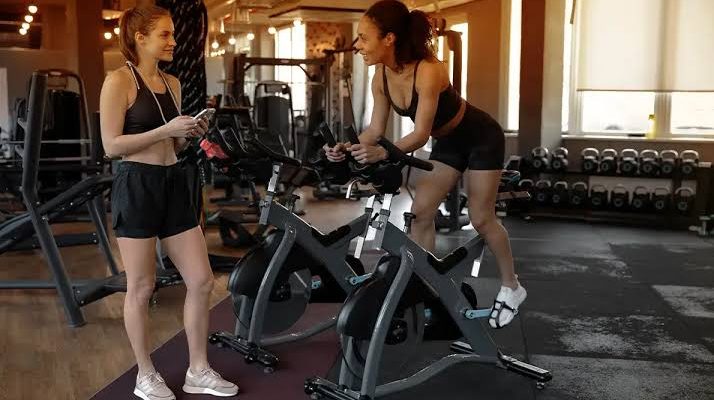
At True Fitness Singapore, participants can arrive early and ask the instructor for setup guidance before testing the position during the warm-up.
Comfortable Hands Begin With the Whole Position
Hand pressure is rarely only a hand problem. Reach, handlebar height, saddle position, resistance and trunk endurance all influence how much weight moves forward.
The rider should use hand discomfort as information about the complete cycling position. A balanced setup and appropriate effort allow the handlebars to guide the body without becoming the main structure holding it up.